Plastic Injection Molding
Clamping force, projected area, resin flow and gate position are considered together. Machine tonnage alone does not confirm that a specific geometry can be molded.
A coordinated scope for design review, tooling, molded components and downstream operations.
EVER POWER handles custom moulded components as engineered orders. The buyer decides function and acceptance; the supplier proposes a practical manufacturing route.
Supply 3D CAD and a 2D control drawing. Note critical fit dimensions, candidate resin or performance requirement, finish and part volume. If you already own a tool, identify its present condition and owner.
A new mold, process setup or finishing line should not be selected solely from a photograph. It is a joint engineering decision based on the target part.
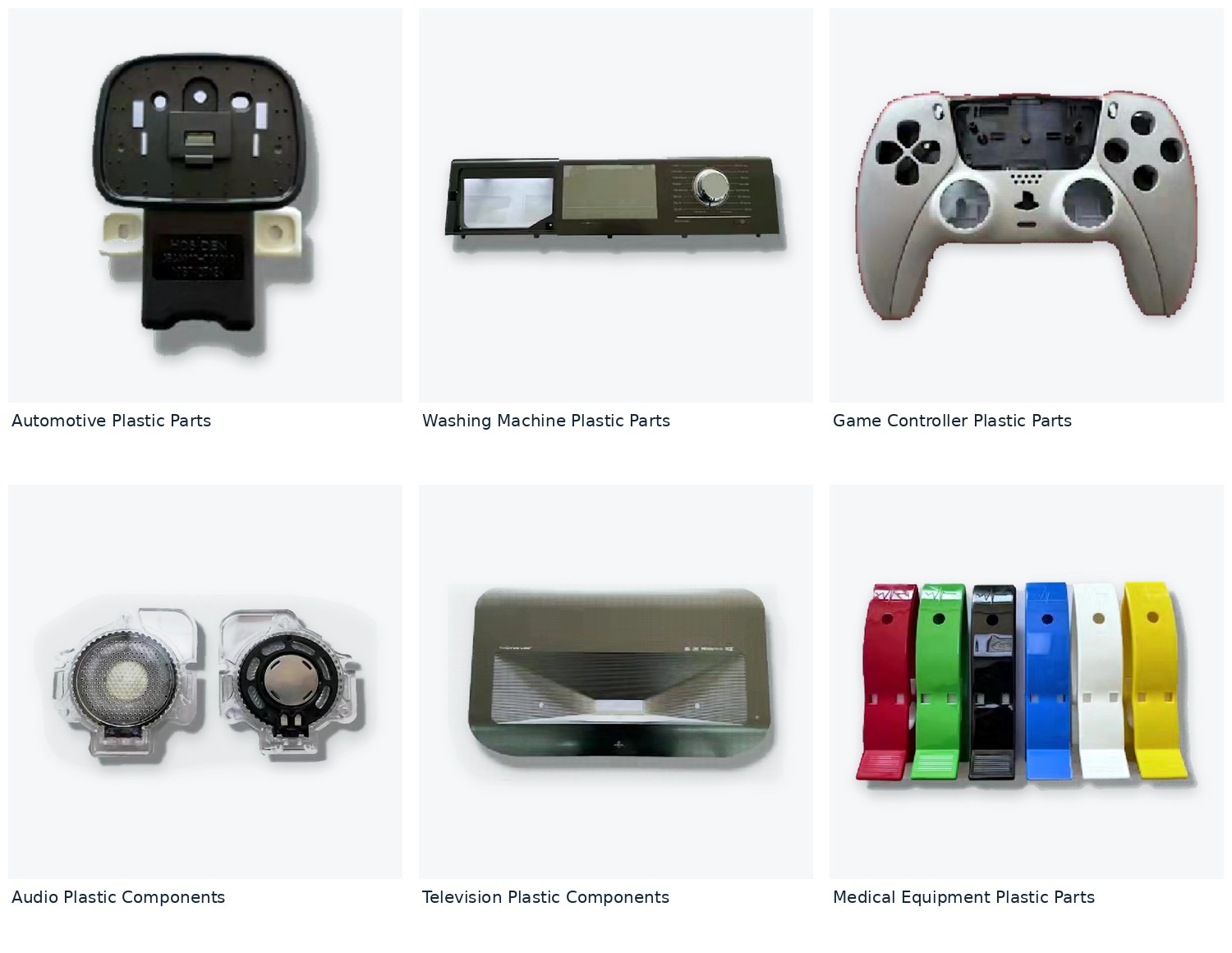
Use the services required by your assembly; unrelated capabilities are not added to make an offer sound broader.
Clamping force, projected area, resin flow and gate position are considered together. Machine tonnage alone does not confirm that a specific geometry can be molded.
A tool quotation depends on cavity count, steel selection, gate layout, sliders, surface finish, tool ownership and expected production volume. No guaranteed mold life is asserted.
Paint adhesion, colour match and graphic registration require product-specific approval. Not every resin, texture or coating combination is interchangeable.
Parts delivered as an assembly need a clear bill of materials, incoming-part inspection, torque or fastening instructions and an agreed functional check.
The completeness of the initial RFQ influences how quickly the supplier can identify real feasibility questions.
| Needed | Why it matters |
|---|---|
| STEP or IGES assembly | Mating conditions, envelope and proposed pull direction |
| 2D drawing | Dimensioning, tolerances, datums and inspection requirements |
| Material and colour | Shrinkage, finish, environment and approval controls |
| Annual demand / first batch | Tool cavity planning, scheduling and amortisation |
| Destination / Incoterm | Packaging, shipment timing and landed-cost scope |
| Sample conditions | T1 trial, rework cycles and purchaser approval |
← Scroll table horizontally on smaller screens →
Tool revision costs and schedule impact should be documented whenever the underlying product changes.
Confirm requirements and return manufacturing questions.
Separate tooling, molding, finishing and shipping scope.
Validate form, fit, appearance and functional use.
Lock approved revision and change-notification process.
MOQ depends on part type and order value. New customers may request 1–5 samples where suitable. Mixed models are possible at around USD 1,500 total. Small 1–2-piece orders can cost more per piece. Indicative lead times: standard items 10–25 working days; custom parts 20–45; project equipment 45–120. EXW, FOB, CIF and DAP are common; FCA, CFR, CPT, CIP and DDP can be agreed case by case.